
Lake Forest, IL, is known for some of the North Shore's largest residential properties, from deep lots along Sheridan Road to tree-lined approaches off Deerpath Road and wooded ravine corridors that give the community its character. Mature oaks, older elms, and established conifers are common here, and many grow close to homes, utility lines, or steep grade changes that make access more complex. The tree care professionals in Highland Park within the Arbor Tree Care network are familiar with assessing risk in older trees, clearing canopy near historic homes, and planning pruning or removal on properties where equipment access must be handled with care.
That is why more Lake Forest property owners turn to Arbor Tree Care to help keep their landscapes maintained throughout the year.

Prefer to Talk to An Expert?
(224) 765-4442
Why Lake Forest Property Owners Trust Local Professionals to Get It Right
With local experience on their side, these professionals understand the large-lot layouts, ravine-side terrain, and mature hardwood canopy common in the area. Every job is completed with methods and equipment matched to Lake Forest properties, with attention to root sensitivity, tight access points, and storm exposure.
From crown reduction near historic homes along East Illinois Road to stump removal on steep ravine slopes off Waukegan Road, each project is completed with precision and an eye toward long-term property care.
If you care about the appearance and safety of your landscape, work with local contractors who know how to keep Lake Forest properties healthy, orderly, and protected.
Our Tree-Service Services
in Highland Park, IL, Include
A Service Area Designed to Fit Your Lake Forest Neighborhood
The deep lots and ravine-cut access features in Lake Forest require tree care solutions that are tailored, not generic. That is why local professionals bring a customized approach to every wooded estate parcel, narrow entry, and lakefront buffer zone.
Whether the property is a historic manor in East Lake Forest, a newer home in Conway Farms, or a wooded lot near the Lake Forest Preserve, the work is adjusted to fit the setting.
From tree trimming and tree pruning to stump removal and root protection, services are matched to the neighborhood's character and the needs of each individual property.
Lake Forest's Dense Canopy Legacy, Rooted in History
Lake Forest was planned in the mid-1800s with a strong emphasis on preserving its wooded character, and that legacy still shapes the tree-rich landscape seen today. It also means modern tree care must account for aging root systems, weakened canopies, and soil compaction that affect how work is performed across the city.
Aging Hardwood Canopy and Structural Decline
Many Lake Forest properties, especially along East Lake Forest and North Shore Drive, feature white oaks, bur oaks, and American elms that have reached advanced maturity. As these trees age, internal decay and weaker branch unions become more common, increasing risk near driveways, roofs, and walkways.
Local professionals respond with crown reduction, deadwood removal, and selective limb pruning to reduce hazard, improve access, and limit storm-related failure in older canopy areas.
Ravine-Adjacent Root Systems and Erosion Pressure
Ravines add depth and drainage to the landscape, but they can also leave roots exposed and soil less stable. Erosion along these banks may weaken root systems and cause trees to lean toward homes or public paths.
Professionals address these areas through careful root-zone assessment, targeted root protection, and the removal of weakened trees when needed, always factoring in the steep grades and drainage patterns common in Lake Forest.
Oak Wilt and Fungal Disease Spread
Dense canopy cover and seasonal humidity make many hardwoods vulnerable to oak wilt, anthracnose, and other fungal diseases that can move quickly through connected root systems.
Trusted crews support healthier landscapes with proactive tree disease treatments, seasonal monitoring for fungal issues, and removal of infected material to help limit spread from one tree or property to another.
Lake-Effect Storm Exposure and Wind Damage
Lake-effect weather can bring strong winds and heavy ice in winter, leading to broken limbs, uprooted trees, and wide-spread canopy damage on exposed lakefront and ridge-top properties.
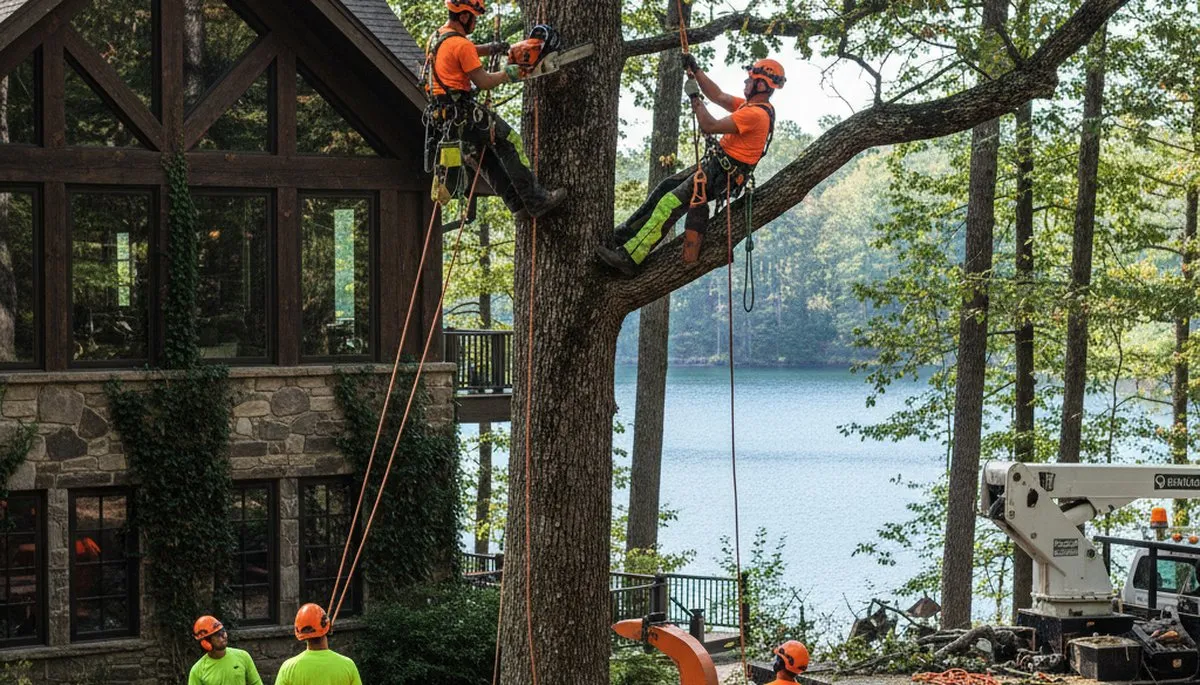
Experienced crews use aerial lifts, rigging systems, and organized debris removal to restore safe access and handle post-storm cleanup under difficult conditions common in Lake Forest.
Narrow Gate Entries and Limited Equipment Access
Gated entrances and narrow service lanes are common in Lake Forest, which makes it harder to position large equipment and move material safely on properties with tight access.
Local pros rely on compact aerial equipment and hand-climbing rigging methods, protecting both structures and surfaces while completing tree work without unnecessary disruption to the landscape.

Kick off your tree service project today!

Tree Services in Lake Forest, IL: Care for Every Season
From regular canopy maintenance to urgent storm cleanup, here is how local pros help keep Lake Forest properties healthy, organized, and protected through every season:
Routine Tree Trimming and Pruning in Lake Forest, IL
- Canopy clearance trimming along Sheridan Road estate drives, where overhanging oak and maple limbs can limit vehicle clearance and create seasonal damage risks.
- Structural tree pruning for mature hardwoods on deep lots off Deerpath Road, focused on weight balance and branch strength in older trees.
- Elevation pruning for sight line restoration near Conway Farms and the Onwentsia Club area, where dense growth can reduce light for lawn areas and understory plantings.
- Crown thinning for wind load reduction on lakefront and ridge-top properties near Forest Park Beach, where exposure to Lake Michigan winds can increase the risk of storm damage.
- Seasonal maintenance trimming for properties along East Illinois Road, keeping branches clear of utility lines, roofs, and fences while preserving the established look of the landscape. Nearby communities such as those looking for tree pruning professionals in Deerfield, IL face similar canopy management needs in mature residential areas.
Book routine trimming and pruning before storm season arrives so your Lake Forest trees stay healthier year-round.
Tree Removal Services in Lake Forest, IL
- Hazardous tree removal for structurally weakened oaks and elms near estate homes along North Sheridan Road, where decay or root failure can put buildings and hardscape at risk.
- Storm damage tree removal after wind or ice events, clearing fallen or leaning trees from rooftops, driveways, and access roads across Lake Forest's exposed lakefront and ravine-edge properties.
- Dead tree removal for standing snags in wooded buffer zones near the Lake Forest Preserve, helping reduce pest habitat and eliminating fall hazards along paths and property lines.
- Multi-stem cluster removal on overgrown ravine banks where invasive plants such as buckthorn and multi-flora rose have spread alongside declining native trees, affecting drainage and slope stability.
- Coordinated removal of large-canopy specimens near historic homes in East Lake Forest, using rigging and sectional dismantling to protect rooflines, masonry, and ornamental plantings during the process.
Removing hazardous or dead trees on time helps protect structures, limit liability, and preserve Lake Forest's established landscape character.
Stump Grinding and Cleanup in Lake Forest, IL
- Below-grade stump grinding for removed oak and elm stumps on estate lawns along Mayflower Road, removing tripping hazards and leaving the area ready for turf restoration or replanting.
- Ravine bank stump removal for stumps left after slope stabilization work, where grinding helps reduce erosion risk and allows native ground cover to return across exposed soil.
- Multi-stump clearing for landscape renovation projects near Conway Farms and the Knollwood Club area, where old stump clusters interfere with new planting or hardscape installation.
- Root flare cleanup and surface debris removal after stump grinding, preparing the site for seeding, mulch, or tree planting of replacement trees suited to Lake Forest's soil and canopy conditions.
- Post-removal site restoration including backfill, grading, and surface prep on properties near East Illinois Road and Waukegan Road, so the cleared space blends naturally with the surrounding landscape. Property owners in nearby communities can also find reliable tree removal contractors in Northbrook, IL for similar stump and cleanup needs.
Complete stump removal and cleanup restores usable lawn space and supports healthy replanting for long-term landscape continuity in Lake Forest.
Emergency Tree Services in Lake Forest, IL
- 24-hour fallen tree response for properties along Sheridan Road and Forest Park Beach, where lake-effect storms and strong winds can bring down large trees across driveways, roofs, and gates.
- Emergency tree services for storm-damaged limb extraction, including hanging limbs and partial failures over structures, vehicles, or walkways that require immediate rigging and controlled removal.
- Rapid debris clearing after ice storms or tornado-adjacent wind events, reopening driveways and roads on gated estates where blocked access creates safety and logistics concerns.
- Emergency root stabilization assessment for trees that suddenly lean or show root heave near structures, providing quick evaluation and intervention before full failure occurs during active weather.
- Post-storm canopy inspection and hazard tagging across large wooded lots in the East Lake Forest and Knollwood areas, identifying secondary risks that may not be visible right away but still threaten buildings and occupants.
Fast emergency response helps protect Lake Forest properties from added damage and restores safe access after storm-related canopy failures.